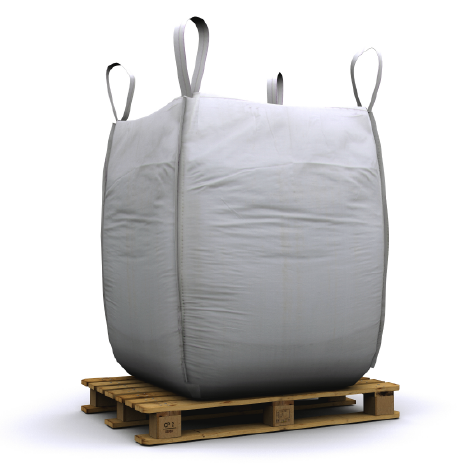
Chemical Bulk Bags

Chemical-grade FIBCs (bulk bags) are engineered to move, store, and protect a wide range of chemical materials, from non-hazardous powders and granules to aggressive additives and certain hazardous liquids when used with the correct liners and certifications. FlexSack supplies custom chemical bulk bags and liner systems built to meet strict handling, contamination, and safety needs for chemical manufacturers and distributors.  

What Chemical Products are Commonly Shipped in FIBCs 

Chemical FIBCs are used across industries to transport and store many product types. Common examples include:

Powdered chemicals & additives 

Salts, catalysts, pigments, fillers 

Granular materials 

Soda ash, zeolites, polymer beads 

Dry intermediates & resins 

Powder resins, masterbatch 

Solid catalysts and absorbents 

Zeolites, Silica-alumina and oxide supports, common absorbents/desiccants 

Slurries & concentrated dispersions 

When used with a properly selected liner 

If you ship liquids or highly reactive chemistries, we’ll recommend appropriate liner systems and, where required, UN-certified packaging (See Liner Selection and UN Certification sections below). 


Why Use FIBCs for Chemical Products 

  • Controlled Containment & Contamination Control 

Liners and coated fabrics limit moisture ingress and prevent cross-contamination during transport and storage. See our Liner Guide for options.  

  • Tailored Chemical Compatibility 

Polyethylene and co-extruded liners are chosen based on chemical resistance charts and compatibility testing to avoid permeation, stress cracking, or degradation. Always confirm compatibility for strong oxidizers and specialty chemistries. 

  • Regulatory & Hazardous-Goods Options 

For hazardous chemicals that require regulated transport, UN-certified FIBCs are available and must pass performance tests and marking requirements per international guidance. 

  • Static Safety & Discharge Control 

For flammable powders or processes that generate static, anti-static/conductive FIBCs (Type C or Type D) and correct grounding/handling procedures significantly reduce ignition risk. 

Common Bag Types for Chemicals 

Bag Type  Ideal For  Key Benefits 
Liner-integrated FIBCs (PE, coex, metalized)  Hygroscopic powders, corrosive additives, slurries  Full moisture/chemical barrier; reduces contamination and allows safe transport of sensitive chemistries 
Spout Top/Spout Bottom FIBCs  Powders, resin beads, slurries (with liner)  Precise filling and dust-free discharge; easy interface to dosing equipment 
UN-Certified FIBCs  Hazardous liquids, classified chemical goods  Passes UN performance tests and marked for regulated transport—required for many hazardous shipments 
Anti-Static/Conductive (Type C/Type D)  Flammable powders, solvent-laden dusts  Dissipates or prevents dangerous static build-up; lowers fire/explosion risk during handling 
Ventilated/Net Bags  Materials that need airflow or drying  Allow drying/airflow while still providing bulk containment (not for liquids) 

Custom Solutions for Chemical Needs 

FlexSack builds custom chemical bulk bags to spec: liner choice, fabric coating, reinforced loops, specialized closures (spouts, slide-gates), conductive yarns, and full traceability documentation. We partner with you to match bag construction to the product’s chemical profile, handling equipment, and transport/regulatory needs, including UN-Certification when required. 

Need something specific? Contact our sales team to design the perfect bag for your project. 

What Our Customers Say 

[FlexSack] is one of the ones that has stood out as the best because of the way they came in and approached and really helped. I mean, they made me look great to my boss because I would turn around to my boss and the owner of our company and say, “Hey, look at all this that we’re doing and how much we’re able to save.” I give FlexSack the credit, but they just came in with a solutionbased approach instead of just a quote asking for my business.” 

 — Steven P. 

FAQ

Yes—but only when you choose the correct anti-static/conductive bag type (Type C or D) and follow grounding and handling protocols. Consult your safety officer and our team for a hazard assessment. 

Start with a chemical-resistance chart for the liner material (PE, EVOH, metalized films) and follow up with small-scale compatibility tests. For strong oxidizers and halogens, many PEs are not suitable—get an expert review. 

If your product is classified as hazardous for transport (per the UN Orange Book/ADR/IMDG/49 CFR), UN-certified FIBCs with correct packaging group ratings are required. We can help determine if your material needs UN certification. 

FIBCs are primary for solids and slurries—liquids generally require specialized inner containers (IBC tanks) or UN-approved liquid packaging. For viscous slurries, a robust liner and spout system can be an option, but it will need to be validated through testing.

Request material certificates (virgin resin/liner), lot traceability, liner specs, UN test certificates (if applicable), and any test data used to validate chemical compatibility. ISO guidance and good recordkeeping are essential. 

Physical address

Helena Industrial Park
545 Elm Street
Helena, AL 35080

Mailing address

P.O. Box 580
Helena, AL 35080

Send a message